The method of correcting wrinkles, folds, and atrophic defects, based on the introduction of polymer microimplants into the skin, creating additional volume, is widely used in aesthetic medicine. The safest preparations for injection contour plastic surgery are those that contain natural components of the connective tissue of the dermis: collagen or hyaluronic acid [1, 2]. Collagen is the main protein of connective tissue, the function of which is to create a three-dimensional extracellular matrix that provides a strong framework for the dermis and the normal course of physiological processes in the tissue. Previously conducted histological and electron microscopic studies on wound healing have shown that collagen initiates an increase in the macrophage reaction and fibroblast proliferation, activation of RNA synthesis in cells, initiation of the synthesis of glycosaminoglycans and neocollagen, as well as rapid and intense
fibrillogenesis, accelerated formation of granulation tissue, which causes a rapid reduction in the size of the wound and its epithelialization [3]. The mechanism of enhancing the synthetic activity of connective tissue cells under the influence of
collagen is that its decay products stimulate the synthesis of elements of the dermal matrix: collagen, elastic fibers and glycosaminoglycans.
The significant increase in the macrophage response may be explained by the ability of collagen to attract macrophages [3]. Based on these properties of collagen in the body, the idea has come up to produce preparations for injection contour plastics.
The very first preparations for injection contour plastic surgery were created in the 90s of the 20th century based on collagen fiber (“Resoplast”, “Zyderm”). All of them were distinguished by high plasticity, low risk of complications (granulomas, infection, etc.) and short-term effect – up to 3–6 months [4, 5]. Gradually, they were completely replaced from the market by hyaluronic acid-based products due to their more stable clinical effect and the absence of the risk of allergic reactions. However, the following collagen-based injection contouring products are currently available on the market.
«Evolence» (France) — contains collagen fiber obtained from pig skin, which has a lower antigen load. The product has not received widespread distribution because its clinical properties are inferior to those of the products based on hyaluronic acid.
«Simetra» (USA) is a preserved donor cell-free human skin matrix «Alloderm» in the form of crushed powder for injection correction. Contains a limited range of proteins of normal human skin (collagen types IV and VII, elastin). It is used to treat burn injuries, in surgical otolaryngology, plastic surgery, and to correct dystrophic, post-traumatic and age-related disorders that require restoration of soft tissue volume.
Most often, type I collagen, obtained from the skin of cattle, which is as close as possible to human collagen in its composition and structure, is used for medical purposes. Type I collagen belongs to the zero-risk group for transmission of viral and microbial infections [6, 7]. According to numerous publications, collagen matrix-based preparations are physiological, safe and effective, have high biocompatibility with human tissues, are non-toxic, the collagen they contain does not migrate, and does not cause the formation of a fibrous capsule. The interaction of collagen breakdown products with fibroblasts initiates their activity, which causes restoration of the normal structure of the dermis [4, 5].
Thus, there are many reasons to consider injectable collagen matrix as an ideal material for reconstructive purposes. To date, more than 750,000 patients have received these implants in the United States and other countries.
The first domestic product for injection contour plastics, collagen biomaterial – gel COLLOST® (manufactured using the technology of the collagen product “Xenoderm”, Italy) (registration certificate No. 29/01010103/26-16 dated April 10, 2003) (ZAO “Biopharmholding”, Russia) is produced in concentrations of 7 or 15 %.
It is a light yellow gel packaged in a sterile 1.5 ml syringe. Shelf life is 3 years from the date of manufacture. Optimum storage temperature is 5–25 °C.
The product is made on the basis of type I collagen obtained from the cattle skin. The main advantage and difference of the product COLLOST® from other similar collagen-containing products for injection contour plastics is the use of native unreconstructed collagen with a preserved three-helix structure, when the spatial form of collagen is not damaged and does not have additional cross-links. Due to this structure, it can act as a matrix for targeted tissue regeneration, which allows it to be used both as a conventional injection microimplant to increase volume and to activate the synthesis of one’s own collagen. In all other preparations, its native structure is not preserved, therefore, after administration, collagen fibers are perceived by the recipient’s body as “aging debris” and are actively lysed.
At the initiative of Biopharmholding CJSC, an experimental study of the body reaction to the product COLLOST® injection was conducted.
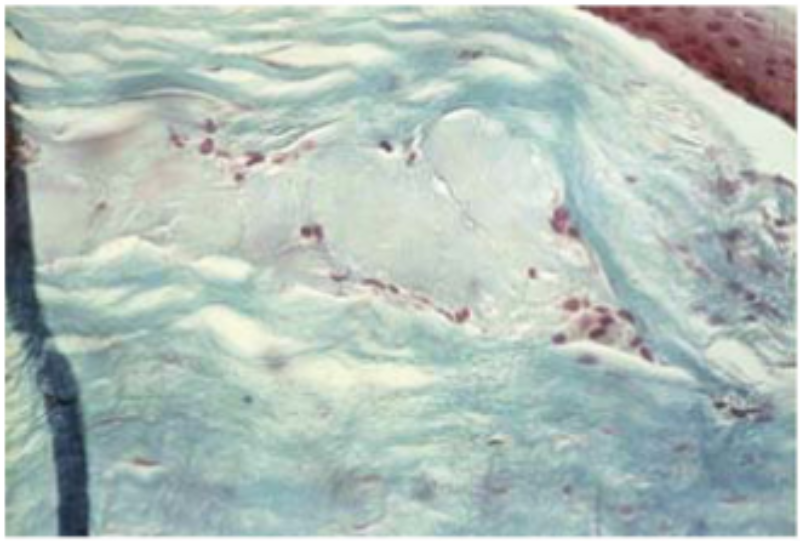
Photo 1. The first day after implantation of the COLLOST® disc into the cornea of the rabbit eye: When examined under light microscopy, no signs of an inflammatory reaction are visible on the preparation (lymphocytes and granulocytes are absent), the epithelium above the implant is thinner, while the endothelium appears normal (photo provided by Biopharmholding CJSC)
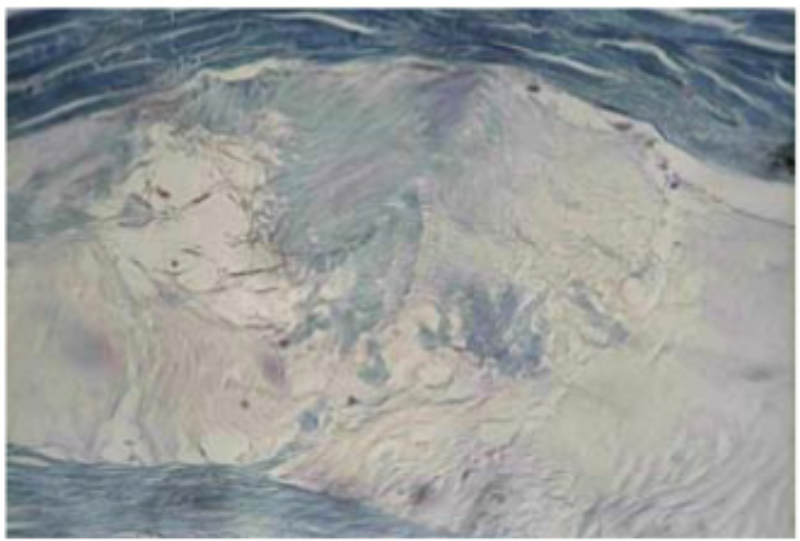
Photo 2. Three weeks after implantation: stromal cells around the implant and cell incorporation into the implant (photo courtesy of Biopharmholding CJSC)
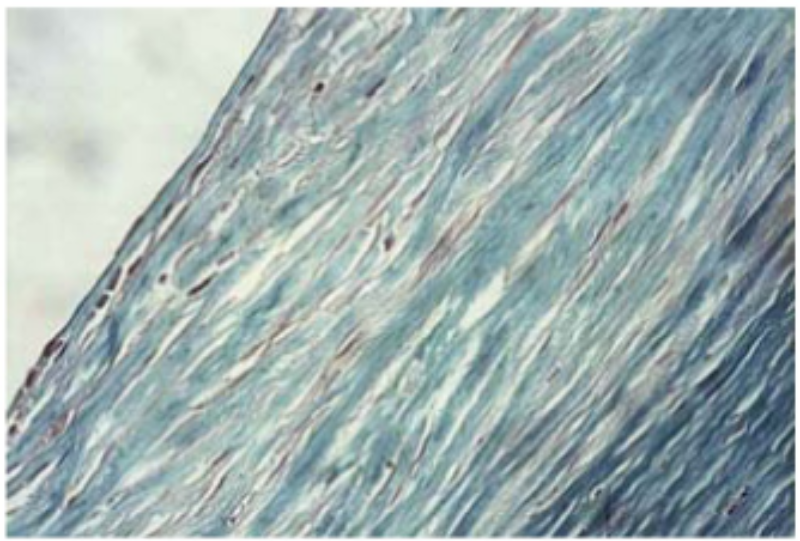
Photo 3. Two months after implantation: the implant is not detected, new tissue is visible in the implanted area, barely distinguishable from the surrounding collagen fibers, which have a typical longitudinal direction, the thickness of the cornea is increased (photo courtesy of Biopharmholding CJSC)
Thin COLLOST® membranes (0.2 mm thick and 3.0 mm in diameter) were implanted into the transparent layers of the cornea of rabbits.
Analysis of the histological data of the cornea reaction to intracorneal injection of type I collagen showed no signs of an acute inflammatory reaction around the implant. Two months after implantation, the microstructure of the cornea was little different from normal (photos 1–3).
The encouraging results of experimental studies made it possible to begin testing the product COLLOST® in clinical environment.
The purpose of this article is to present the results of clinical application of COLLOST® gel for correction of atrophic changes in the skin.
Clinical studies of the effectiveness of COLLOST® gel 7 % containing native unreconstructed bovine type I collagen were conducted at the Danishchuk Clinic and the clinics of the De’tal medical community on 68 patients aged 19–38 years with various cosmetic defects of the “minus tissue” type (see table).
TABLE. CORRECTION OF COSMETIC DEFECTS OF THE «MINUS-TISSUE» TYPE
USING COLLOST® GEL 7 %

The course of treatment consisted of 3 to 8 sessions (1.5–12 months) with a frequency of administration of once every 3–6 weeks. Number of sessions and the frequency of administration of the product were determined individually depending on the severity of atrophic defects and the rate of regression of the clinical effect. Typically, the first three sessions are carried out once every 2-3 weeks, and starting from the 4th session – once every 4-6 weeks. Already after the 3rd session, a significant reduction in the volume of the preparation required to achieve complete correction of the cosmetic defect is observed.
Standard methods of administration are used: point injections, linear introduction. For the correction of cicatricial and atrophic skin deformations, post-acne scars, it is preferable to use a 7 % gel, since it is more flexible (15 % gel has a very high viscosity, so its introduction into dense fibrous tissue is difficult). A preliminary intradermal test is mandatory 7-14 days before the procedure. For this purpose, each package of the product contains a special syringe test.
COLLOST® gel is quite viscous, so it is necessary to warm the product to body temperature immediately before administration. It is not recommended to overheat the preparation, as this leads to denaturation of native collagen and loss of its properties (when heating the syringe in hot water, the gel becomes liquid and flows out of the syringe in drops). For ease of use, it is recommended to use needles with a cross-section diameter of 0.27 G x 4 mm or 0.27 G x 6 mm. The product is always administered until the hypercorrection effect is achieved.
The introduction of COLLOST® gel is contraindicated for patients with autoimmune, oncological diseases, blood clotting disorders, collagenoses, hypersensitivity to the components of the product, acute dermatoses.
After the injection, a bright, diffuse hyperemia occurs, which can persist for up to 12–24 hours; complications typical of any injection can develop. These include erythema, swelling, pain or tenderness at the injection site, ecchymosis. Usually the above phenomena resolve spontaneously within 1–2 days.
When correcting cicatricial deformities in the perioral area, moderate swelling may be observed, which completely regresses within 3–5 days. All side effects are localized strictly in the area of the product administration, completely regress within 1–2 days after injection and do not require additional drug therapy. But if necessary, we can recommend using gels Traumeel, Troxevasin, Lyoton, etc. Ecchymosis is also possible, especially when correcting atrophic deformities of the skin of the face and neck. To speed up the resorption of hemorrhages, it is recommended to apply hepatrombin ointment or Lioton gel, Arnica cream, Spasatel (Rescuer) balm, creams with vitamin K, etc 2-4 times a day.
Considering the possible risk of allergic reactions, it is necessary to have anti-shock, antihistamine or hormonal products in injection form (tavegil, suprastin, hydrocortisone, dexamethasone, etc.) as well as steroid cream.
When correcting atrophic post-acne scars, superficial and superficial-median chemical peels (with 70 % glycolic acid, malonic, salicylic, 15 % trichloroacetic acid, etc.), microcrystalline resurfacing and injections of COLLOST® gel, which are recommended to be performed after completing a course of chemical peeling, are successfully combined.
When treating “fresh” atrophic scars and scars from chickenpox, atrophy, stretch marks, etc., it is recommended not only to restore volume, but also to correct skin color. Dyschromia is caused by the development of a subacute inflammatory reaction and impaired microcirculation.
In this case, the use of vasotonic products that strengthen the capillary walls and improve microcirculation is absolutely justified: peridilheparin, buflomedil, procaine, pentoxifylline and extract of rutin and mellilote. The products are administered intradermally, once a week (in between the administration of COLLOST® gel), the number of sessions is from 4 to 6.
As clinical observations have shown, the most promising application of the COLLOST® gel is for atrophic changes in the skin, both of involutional genesis and those formed at the site of inflammatory elements of post-acne, chickenpox, the introduction of prolongedaction steroids, as well as in the area of surgery, etc. Since by now a certain amount of experience has been accumulated in replacement correction with preparations based on hyaluronic acid and collagen, as well as based on combined and synthetic materials (Restylane, Artecoll, biopolymer gel), then when comparing them, a number of advantages of injectable collagen microimplants can be noted, namely in the correction of skin atrophy. The clinical effect of using injectable collagen is not limited to the restoration of the required tissue volume; it is due to the powerful stimulation of extracellular fibrillogenesis and is recommended for skin atrophy of various origins (post-acne, post-traumatic, post-operative, etc.). At the same time, when correcting folds and wrinkles, the formation of which is associated not so much with atrophy of the dermis, but with the activity of the facial muscles, redistribution of subcutaneous fat, gravity, the use of hyaluronic acid-based products is more justified. Correction is achieved in one session, and a decrease in the clinical effect is observed only after 6–8 months.
Since there are currently no clearly effective methods for treating atrophic skin scars, our clinical experience with collagen-containing gels COLLOST® allows to increase the effectiveness of treatment of aesthetic defects of this kind and reduce the likelihood of complications. Considering the possible risk of “insufficient effectiveness” of the therapy, which is often assessed subjectively, mandatory photo documentation and signing of informed consent with the patient is recommended, which specifies the possible risks of the therapy and alternative treatment methods.
Example 1 (photo 4). Patient B., 33 years old, skin atrophy after the injection of diprospan.
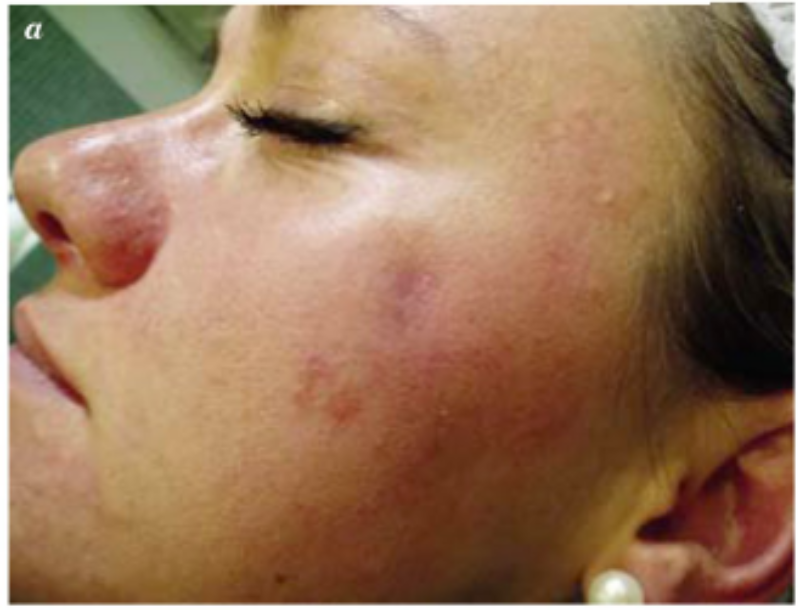
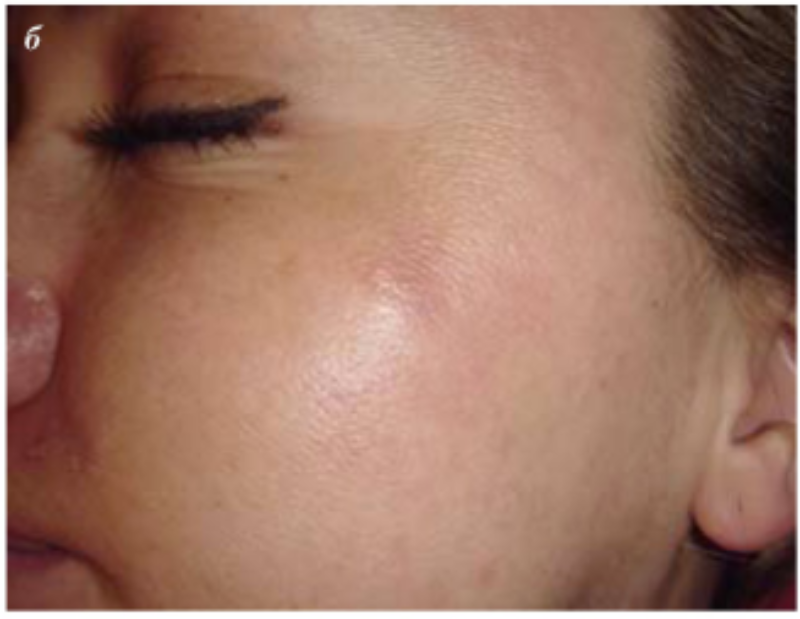
Photo 4. Patient B., 33 years old, skin atrophy after the introduction of diprospan: before treatment (a); after three injections of COLLOST® gel 7 % (b).
Example 2 (photo 5). Patient D. 28 years old, skin atrophy after injection of Kenalog.
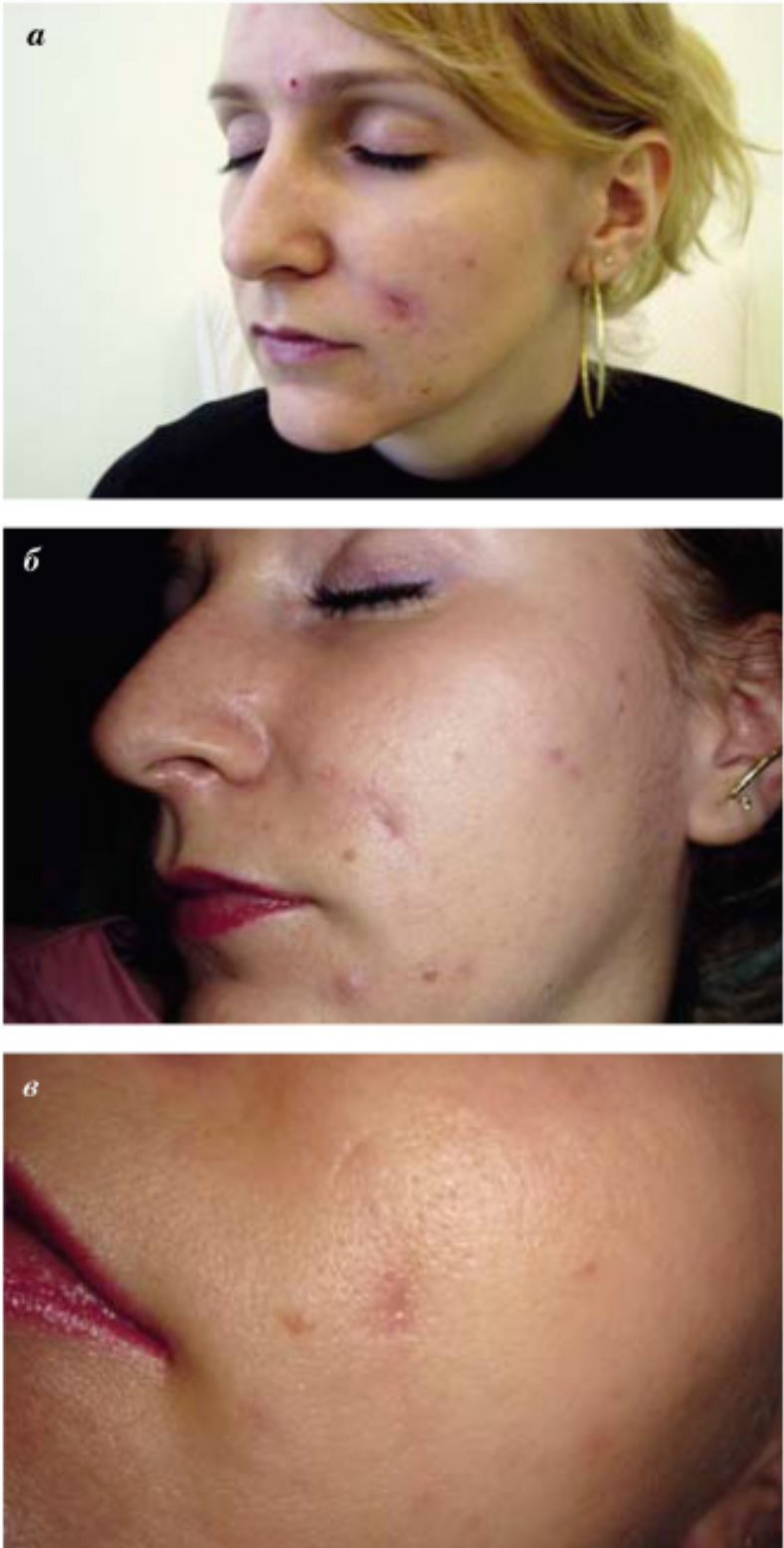
Photo 5. Patient D. 28 years old, skin atrophy after injection of Kenalog: before treatment (a); after 9 correction sessions with COLLOST® gel 7 % (b); after 11 sessions (in).
Example 3 (photo 6). Patient M., 30 years old, post-acne. History: acne vulgaris (papulopustular form) for 12 years. Treatment: sebosuppressants (retinol, zinc, sulfurplus), physiotherapy (cryomassage), chemical peels with 70 % glycolic acid (6 sessions). To correct atrophic changes in the skin, only COLLOST® gel 7 % was used, which was administered once a month, with a total of 3 sessions.
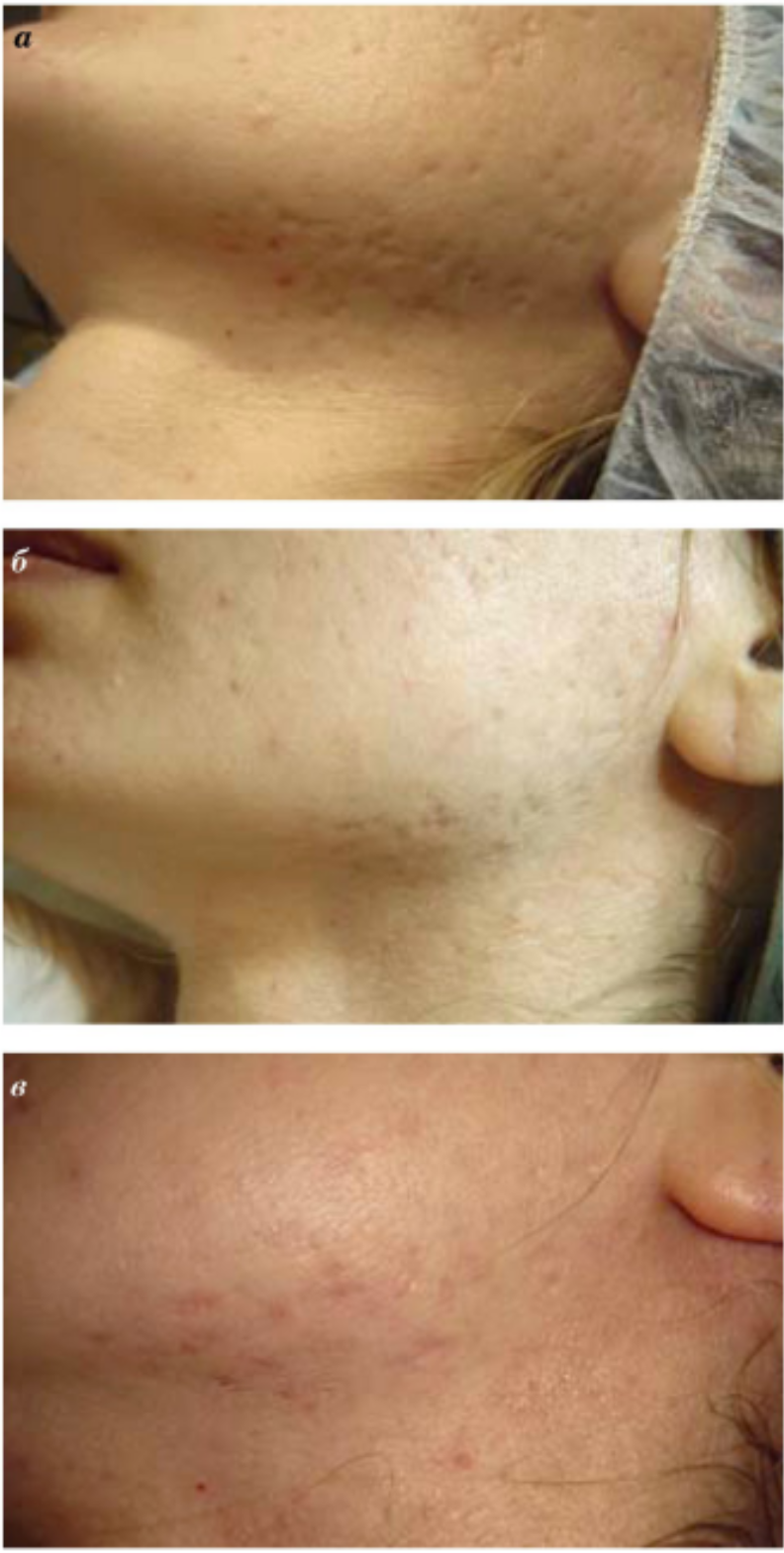
Photo 6. Patient M., 30 years old, post-acne: before treatment (a); after three correction sessions (b, c)
The method of injection was pointwise; the product was injected until hypercorrection was achieved. The result is very good, which confirms the effectiveness of the “individual” treatment regimen. Typically 4-6 injections are needed to achieve this result. Example 4 (photo 7). Patient A., 35 years old. History: acne vulgaris (moderate infiltrative form) for more than 10 years. Treatment: antibiotics were used, but positive dynamics were achieved only with treatment with Retasol topical retinoid for more than two years. This patient received combination therapy:
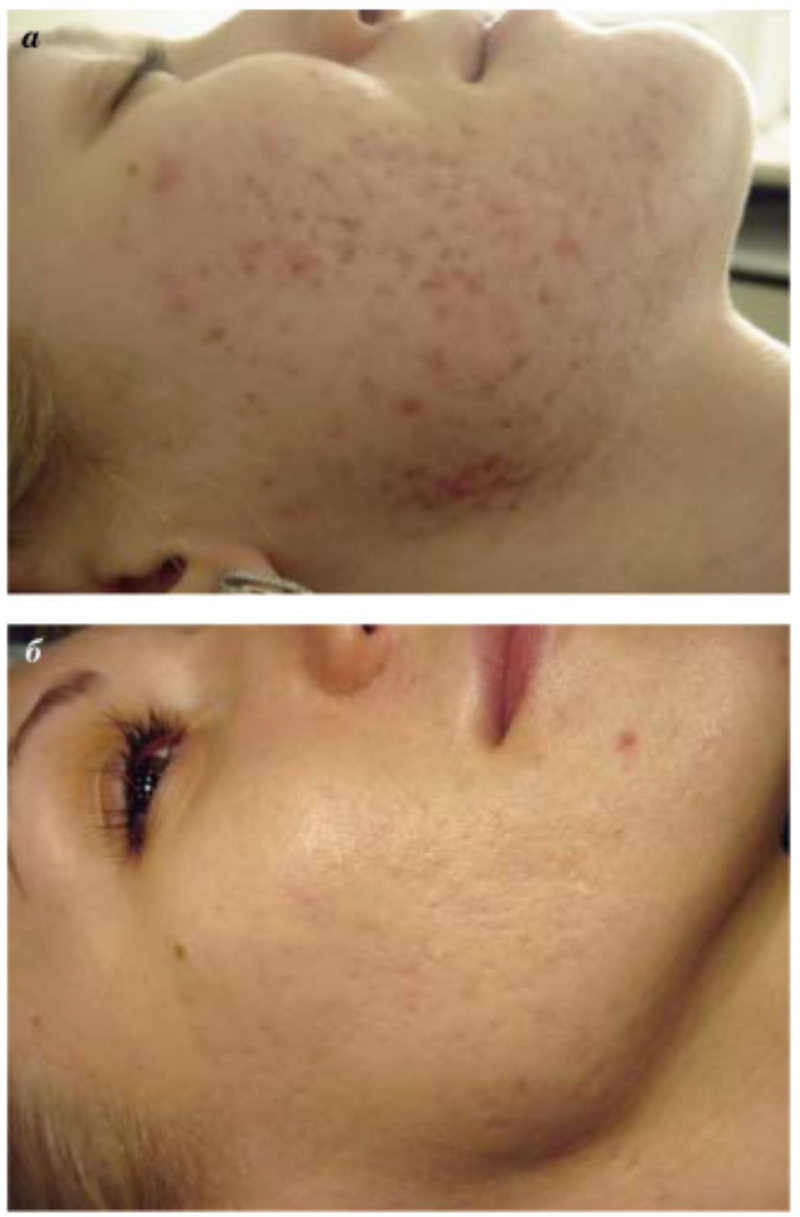
Photo 7. Patient A., 35 years old, acne vulgaris: cheek area before correction of atrophic changes in the skin (a); after 7 sessions of administration of COLLOST® gel 7 % (b)
1 stage – chemical peeling with 70 % glycolic acid (5 sessions) to stop the inflammatory process and achieve stable remission;
2 stage – microcrystalline polishing (6 sessions);
3 stage – treatment with COLLOST® gel 7 %. The method of injection was pointwise; the material was introduced with hypercorrection. The course consisted of 7 sessions.
(frequency of injection: first 3 sessions – once in 3 weeks, then once a month).
Currently, stable clinical remission is observed — the patient has been under dynamic observation for more than 6 months.
Example 5 (photo 8).
Complications. During the work with this product (3 years, 119 patients), only one complication was observed in the form of an allergic reaction — erythema to the test sample. The allergic reaction was accompanied by fever: chills, subfebrile temperature. After a single administration of hydrocortisone (125 mg intramuscularly), the allergic reaction was completely stopped.
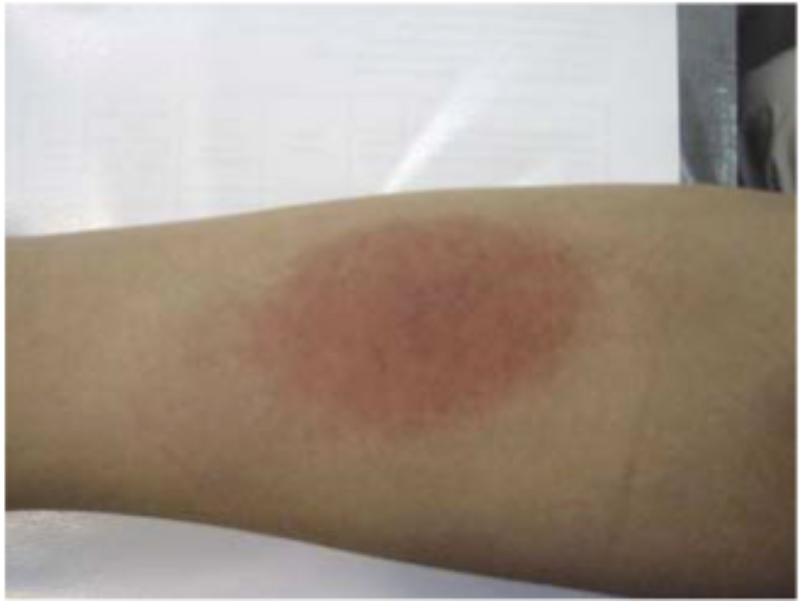
Photo 8. Allergic reaction to skin test
1. Fagien S. Facial soft-tissue augmentation with injectable autologous and allogeneic human tissue collagen matrix (autologen and dermalogen). Plast Reconstr Surg 2000;105(1):362-73; discussion 374-375.
2. Keefe J, Wauk L, Chu S, DeLustro F. Clinical use of injactable bovine collagen: a decade of experience. Clin Mater 1992;9(3-4):155-162.
3. Serov V.V., Shekhter A.B. Connective tissue. M., «Medicine» 1981; 312.
4. Danishchuk IV, Laputin EV. Contour plastic surgery with microimplants. Does the ideal material exist? Cosmetics and Medicine 2001;1:63-69.
5. Matti BA, Nocolle FA. Clinical use of Zyplast in correctin of age and diseaserelated contour deficiencies of the face. Аesthetic Plast Surg 1990;14:227.
6. Ruszczak Z. Effect of collagen matrices on dermal wound healing. Adv Drug Deliv Rev 2003;55(12):1595-611.
7. Klein AW . Collagen substitutes: bovine collagen. Clin Plast Surg 2001;28(1):53-62.
8. Report of a WHO. Consultation on medicinal and other products in relation to human and animal transmissible spongiform encephalopathies. WHO/EMC/ZOO/97.3; WHO/BLG/97.2.

Write to us and our specialists respond as soon as possible