1Federal State Budgetary Educational Institution of Higher Education “N.I. Pirogov Russian National Research Medical University” of the Ministry of Healthcare of the Russian Federation, Moscow, Russia;
2JSC «Institute of Plastic Surgery and Cosmetology», Moscow, Russia;
3Federal State Budgetary Educational Institution of Higher Professional Education “Central State Medical Academy” of the Presidential Executive Office of the Russian Federation, Moscow, Russia;
4Federal State Budgetary Scientific Institution «Research Institute of Occupational Medicine named after Academician N.F. Izmerov», Moscow, Russia;
5OOO «Niarmedik», Moscow, Russia
Corresponding author: Ikonnikova Evgeniya Vladimirovna — «Central State Medical Academy» of Aff airs Administration of the President of the Russian Federation, Moscow, Russia.
Involutive changes of the skin are inevitably accompanied by reduction in the synthesis of collagen and in the rate of its metabolism. To restore and reinforce the dermal skeleton, various injection techniques are widely used in cosmetology, including the use of collagen preparations. Material and methods. The study included 60 patients (mean age, 48±7.6 years) with involutive changes in the facial skin. All patients underwent a course of biorevitalizer injections into the facial skin. The patients were allocated into two groups of 30 subjects each, depending on the used agent. Participants in the 1st group were injected with collagen biomaterial, and patients in the 2nd group received a biorevitalizer containing unstabilized high molecular weight hyaluronic acid. The study design and results are published in the international Clinical Trials database [1].
Results. According to the data of physical examination, 3D photography, clinical scales, global aesthetic improvement scale (GAIS), and instrumental diagnostics, a pronounced improvement in correction of involutive changes in the facial skin occurred in patients of both groups after completion of the course. This indicates a high efficiency of both therapies. According to the skin elasticity indicator, application of collagen biomaterial provided a significantly more pronounced effect.
Keywords: age-related skin changes, collagen injections, hyaluronic acid injections, skin elasticity.
N.E. Manturova — Chief External Specialist Plastic Surgeon of the Ministry of Health of the Russian Federation, Head of the Department of Plastic and Reconstructive Surgery, Cosmetology, and Cellular Technologies, Highest Category Doctor, Honored Doctor of the Russian Federation, Pirogov Russian national research medical university, Moscow, Russia. https://orcid.org/0000-0003-4281-1947
E.V. Ikonnikova — PhD in medicine, Associate Professor of the Department of Dermatology and Cosmetology of «Central State Medical Acade-my» of Affairs Administration of the President of the Russian Federation. https://orcid.org/0000-0002-8813-9132
A.G. Stenko — Doctor of Medicine, Professor of the Department of Dermatology and Cosmetology of «Central State Medical Academy» of Affairs Administration of the President of the Russian Federation, Head of the Cosmetology Department of the Institute of Plastic Surgery and Cosmetology. https://orcid.org/0000-0002-6686-4253
E.A. Chajkovskaya — Candidate of Pharmacological Sciences, Medical Advisor of the Institute of Plastic Surgery and Cosmetology, https://orcid. org/0000-0002-5767-1601
Ya.A. Petinati — Candidate of Medicine, Senior Researcher. https://orcid.org/0000-0002-3994-4346 A.A. Bolgarina — Executive Director of the Aesthetic Medicine Society. https://orcid.org/0000-0003-3345-6998
Manturova NE, Ikonnikova EV, Stenko AG, Chajkovskaya EA, Petinati YuA, Bolgarina AA. Clinical evaluation of the collagen therapy effectiveness in correction and prevention of involutive skin changes. Russian Journal of Clinical Dermatology and Venereology=Klinicheskaya dermatologi-ya i venerologiya. 2018;17(6):XX-XX. (In Russ.). https://doi.org/10.17116/klinderma201817061X
The dermal layer of human skin consists predominantly of a dense, collagen-rich extracellular matrix (ECM). Collagen is the most abundant protein in the ECM and makes up the bulk of the skin (90% of dry mass) [2]. Collagen is responsible for mechanical properties of the skin (strength and stretch), for maintaining and restoring its integrity. It is synthesized and maintained at a stable concentration by dermal fibroblasts. Dysfunction or insufficient activity of fibroblasts has a significant impact on the properties of connective tissue of the skin.
Dermal fibers are represented mainly by type I and type III collagen. Collagen fibers have a close relationship with fibroblasts, determining their functional activity. During collagen catabolism, peptide regulatory factors are formed that influence the reparative process.
Human skin, like all other organs, undergoes a natural aging process. In addition, the skin, unlike internal organs, is constantly in interaction with external environmental factors, serving as a protective barrier, including against ultraviolet (UV) radiation. Therefore, the most clinically noticeable age-related changes primarily occur on the skin of the face and neck [3]. The clinical signs of natural aging and photoaging of the skin are different.
Natural aging of the skin is characterized by a decrease in its elasticity with the formation of a fine-wrinkle network; to a lesser extent — increased pigmentation, deep wrinkles or the appearance of areas of hyperkeratosis, which are characteristic features of photodamage and photoaging of the skin. There are also histological differences between photo- and natural aging of the skin [4]. In naturally aging skin, gradual atrophic changes in the epidermis, thinning of the dermis, and flattening of the dermo-epidermal junction are observed. In contrast, skin with signs of photoaging is often associated with increased epidermal thickness (hyperkeratosis) and degenerative damage to the dermal connective tissue known as solar elastosis [5].
The balance between the processes of collagen synthesis and destruction determines the integrity and functional completeness of the collagen framework of the dermis. An imbalance of these processes leads to adverse consequences. In particular, there is an accumulation of defective molecules with an overly stabilized structure with age, as a result of which they become less accessible to collagenases. Thus, the rate of collagen degradation is reduced [6].
With age, the number of cross-links in collagen fibrils in any tissue increases. Also, age-related stabilization of its structure occurs through non-enzymatic glycosylation.
Collagen forms bonds with sugars at lysine and oxylysine residues, which interferes with the formation of normal cross-links between molecules. In this case, protein fibers lose their hydrophilicity, their extensibility decreases, and their rigidity increases. The formation of additional cross-links is also associated with free radical oxidation processes. The consequence of collagen fibers structure hyperstabilization is a decrease in the elasticity of the vascular wall, which causes persistent expansion and thinning of the capillaries of the dermis [7].
In order to stimulate collagen synthesis, various methods are used in cosmetology. The action of the most widely used methods is based on the activation of collagen degradation processes. Expression and activation of collagenases occur as a result of inflammation, which is stimulated by mechanical, physical or chemical trauma. Such methods include chemical peels, laser therapy, dermabrasion, etc. Activated enzymes catabolize damaged collagen, and the products of its biodegradation become a stimulus for the synthesis of new protein. Also, in order to enhance collagen synthesis, injection methods — collagen and plasma therapy, administration of hyaluronic acid (HA) preparations, etc. are widely used.
One of the most popular and widely used methods of treating involutional changes in the skin is injection therapy with native hyaluronic acid-based materials at a concentration of 10-20 mg/ml. The effectiveness of their use is based on the high moisture-holding capacity of HA, which results in skin hydration; stimulation of synthesis of one’s own HA;
inhibition of matrix metalloproteinases (MMP) and prevention of ECM destruction; anti-inflammatory and antioxidant effects; creating an optimal physiological environment for the migration and vital activity of cells, primarily fibroblasts [8].
The basis of collagen therapy of the skin is the use of injectable preparations based on heterologous collagen with a preserved triple-helix structure. When the products are introduced into the dermis, the activity of MMP increases; during the breakdown of the introduced collagen, short peptides and amino acids necessary for the synthesis of new protein accumulate in the ECM. With an increase in the concentration of collagen fragments, protein synthesis by fibroblasts is activated by a feedback mechanism. Due to the mechanical effect on fibroblasts, their proliferative and synthetic activity is enhanced (Fig. 1).
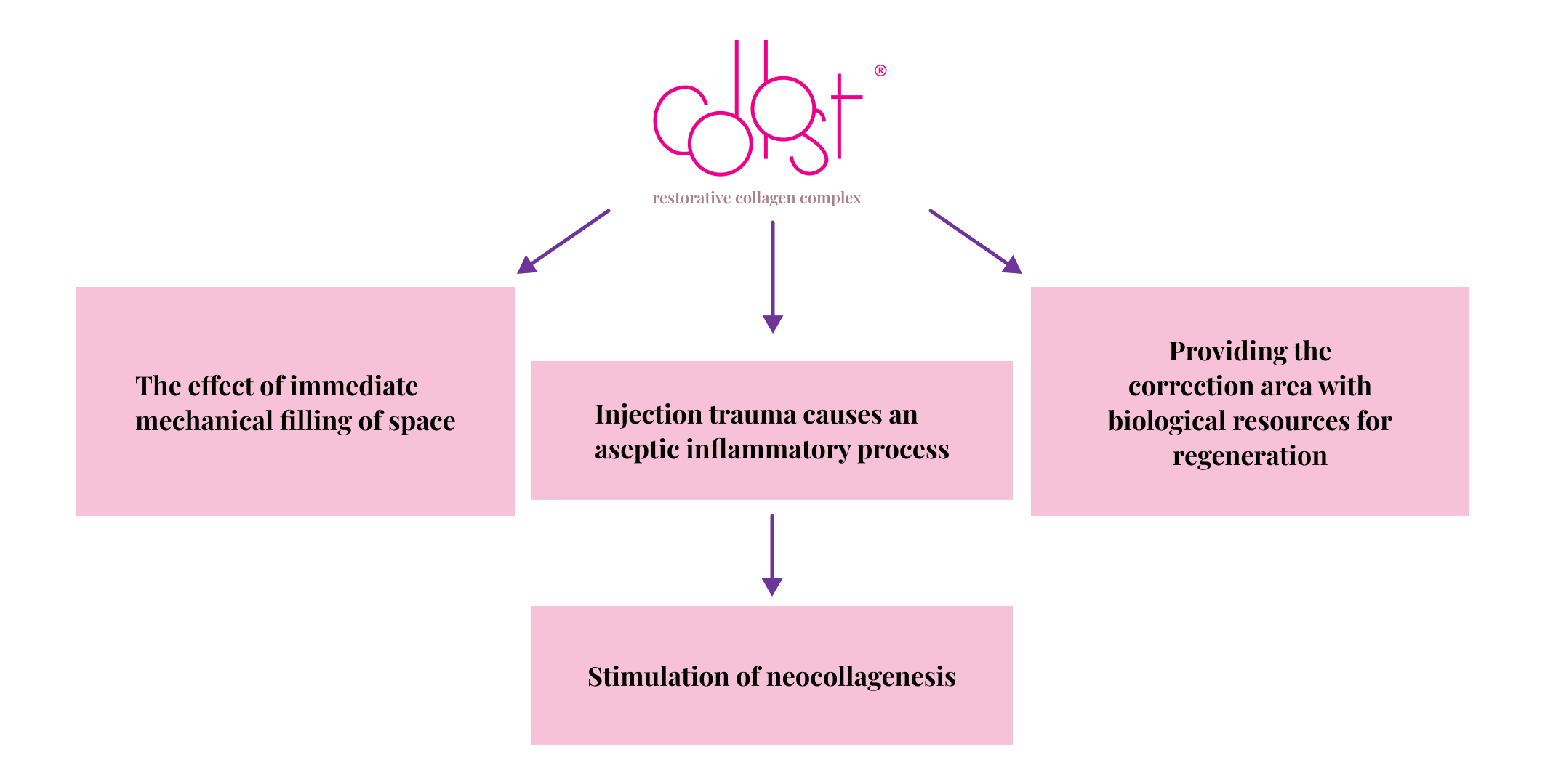
Fig. 1. Mechanism of action of injectable collagen biomaterial COLLOST® on the skin.
One of the injectable collagen-containing medical products officially registered in the Russian Federation is the COLLOST® biomaterial. It contains highly purified native unreconstructed collagen with preserved fibrillar fiber structure, intended for the repair of damaged or altered (including due to age factors) connective tissues [13–15]. The biomaterial COLLOST® has been used in dermatology and aesthetic medicine for over 10 years [15, 16].
Currently, evidence-based medicine, based on data from well-organized multicenter studies, is becoming a decisive factor for a doctor when choosing a particular method of treatment or cosmetic correction. In connection with the international trend of forming an evidence base for injectable products used in aesthetic medicine, we planned to conduct a study of the effectiveness of a biorevitalizant based on native collagen (COLLOST® gel 7 %) in comparison with a material based on native high-molecular HA using a wide range of methods for clinical and instrumental evaluation of the result.
The study included 60 patients (women) aged 35–65 years (mean age — 48.5±7.6 years) with involutional changes in the facial skin, meeting the inclusion and non-inclusion criteria. All patients were randomly divided into two groups of 30 people. Patients of the 1st group (the main group) underwent injection therapy of facial skin using the micropapular technique with 7% collagen biomaterial COLLOST® in a course of three procedures with an interval of 3 weeks. Patients of the 2nd group (reference group) underwent injection therapy of facial skin also using the micropapular technique with the use of a biorevitalizer based on 2 % non-stabilized HA in a course of 3 procedures with an interval of 3 weeks.
HA is the basis of most injectable products widely used in the treatment of age-related skin changes. Skin biorevitalization with HA preparations is included in the basic therapeutic anti-aging programs developed by leading experts in the field of aesthetic medicine [17]. The results of numerous studies [18, 19] confirmed the effectiveness and safety of biorevitalizants based on 2% high molecular weight HA. Indications for use and the scheme for constructing a course of injections of biorevitalizants with the highest possible concentration of HA are similar to those for 7% COLLOST®, which became the rationale for choosing the reference product.
Products used in collagen therapy may contain proteins with different morphological structures: native and fractional. In the products/materials made from native collagen, the natural structure of the fiber arrangement is completely preserved, while cellular elements, as well as areas of blood vessels and hair follicles, are removed [9]. The filamentous structure of native collagen macromolecules serves as the basis for directed cell migration and differentiation; allows fibroblasts to migrate in a directed manner and over a greater distance than usual. Being gradually absorbed, the collagen implant is replaced by autologous tissue, which is similar to the surrounding tissues in its histological structure, which is its exceptional advantage over currently manufactured products based on reconstructed or fractional (hydrolyzed) collagen [10-12].
The study design included five visits. All patients were assigned a consultation with an immunologist at the inclusion visit (V0) to assess their allergic status; patients in the main group underwent an allergy test with collagen biomaterial (COLLOST® 7%), the results of which were assessed after 2 weeks.
The study involved women, mainly of reproductive age: 15 (50 %) people in the main group and 20 (66.67 %) in the reference group. The body weight of patients in the main group was 52–80 kg, in the reference group – 49–93 kg. In the overwhelming majority of cases, the patients had no complicated allergy history (93.33 % in the main group and 76.67 % in the reference group). The majority of patients in both groups had normal skin thickness: 21 (70%) people in the main group and 19 (63.33%) in the reference group. Patients with normal skin sensitivity predominated in both groups: 25 (83.33%) people in the main group and 24 (80%) in the comparison group.
The predominant skin phototype in the majority of patients in both groups was defined as II according to the Fitzpatrick classification: 25 (83.33%) people in the main group and 23 (76.67%) in the reference group.
The initial condition of the facial skin and the results of the course of procedures were assessed using visual examination (integrated index of skin photoaging according to Geynitz-Alexiades-Armenakas, the degree of wrinkle severity in seven areas according to the Merz photo scale), instrumental research methods (measurement of moisture, skin elasticity, level of microcirculation and lymphatic circulation, ultrasound). The effectiveness of the procedures was assessed by participants and research physicians using the GAIS scale. Throughout the research, an archive of 3D photographs was created.
The final examination of patients and assessment of skin condition indicators were carried out 3 weeks after the 3rd procedure in both groups. According to visual examination and 3D photography, patients in both groups showed a reduction in the depth of wrinkles, smoothing of the skin microrelief, increased smoothness, smoothing of the skin color, and a reduction in the severity of signs of photoaging (Fig. 2, 3).

Fig. 2. A 52-year-old female patient before and after a course of three procedures with collagen biomaterial COLLOST® 7% (3D photography): reduced depth of wrinkles, plain skin microrelief, and increased skin smoothness.

Fig. 3. A 59-year-old female patient before and after a course of three procedures with collagen biomaterial COLLOST® 7% (3D photography): improved skin microrelief, increased skin smoothness, consistent skin color, and reduced signs of photoaging.
Statistical analysis data showed a significant improvement in skin quality in both groups: the integral index of skin photoaging according to Geynitz-Alexiades-Armenakas statistically significantly decreased (p<0.05, Wilcoxon test, comparison of indicators after the third procedure with screening data). Thus, in the main group (COLLOST® 7%) the median reduction in the indicator was 24.26 %, in the reference group — 27.27 %.
The differences between the groups for this indicator were not statistically significant; both groups showed positive dynamics for this indicator (p>0.05, Mann-Whitney test).
A significant leveling of the skin macrorelief was noted in both groups: the depth of wrinkles according to the Merz photo scale (the total indicator for seven zones) statistically significantly decreased (p<0.05, Wilcoxon test, comparison of indicators after the third procedure with screening data).
In the COLLOST® group, the median reduction in the indicator (which clinically corresponds to a reduction in the severity of wrinkles) was 28.57 %, in the reference group — 37.5 %. The effect of “rapid smoothing of wrinkles” is traditionally noted when using HA-based biorevitalizers, which was once again demonstrated in this study. The calculations performed show that the dynamics of changes in wrinkle depth from the moment of screening to the end of the course of procedures were comparable in both groups.
In this study, the effectiveness of therapy was also assessed using objective methods of instrumental diagnostics. According to ultrasound scanning of the skin (with a 20-22 MHz sensor), in both groups, when comparing the values after the third procedure with the values at the screening stage, a statistically significant increase in the thickness of the epidermis, dermis and dermis density in the forehead, cheek and periorbital region was observed (p<0.05, Wilcoxon test) (Fig. 4, 5). In most cases, the median change value, expressed as a percentage, was greater in the COLLOST® complex group (the exceptions were the indicators “dermis density in the forehead area” and “dermis thickness in the periorbital area”). The differences between the complexes, according to ultrasound scanning data, were statistically insignificant throughout the study and in the dynamics of the indicators (p>0.05, Mann-Whitney test). The exception was the absolute value of the dynamics of dermis density in the paraorbital area — this indicator was higher in the COLLOST® group.

Fig. 4. A 54-year-old female patient. The results of skin ultrasound (paraorbital area) before and after a course of three procedures with collagen biomaterial COLLOST® 7%.

Fig. 5. Comparative data of skin ultrasound after a course of procedures in the 1st and 2nd groups (acoustic density of the dermis, paraorbital area): the indicator is statistically significantly increased.
The diagrams present the data as a median, and also indicate the medians of the relative dynamics of the indicators. The above indicates the greater effectiveness of the COLLOST® complex in relation to skin restructuring processes.
When assessing the level of hydration of the superficial layers of the epidermis in the main group (COLLOST® 7 %), no statistically significant increase in the indicator was noted in any of the assessed areas of the face, although a positive trend was observed.
In the reference group, statistically significant improvement was observed for all parameters, except for hydration in the paraorbital area. It should be noted that the magnitude of this improvement was relatively small (the median was 13.5 % versus 8 % in the COLLOST® group), and no statistically significant differences between the complexes were found in intergroup comparisons (p>0.05, Mann-Whitney test).
In relation to the elasticity index of facial skin, the analysis of data in both groups showed a pronounced positive trend: Skin elasticity in the forehead area in the main group increased by 30.9 %, in the reference group by 10.78 %; Skin elasticity in the paraorbital area increased by 19.10 and 10.52 %, respectively; skin elasticity in the cheek area in the main group increased by 15.75%, while in the reference group no statistically significant change was noted (the median increase was 2.26%).
When assessing the average skin elasticity index for all areas (forehead, paraorbital area, cheek), statistically significant differences were noted between the groups: the collagen biomaterial COLLOST® showed higher efficiency (Fig. 6).

Fig. 6. Comparative data of skin elasticity (mean per area ― forehead, paraorbital area, cheeks) after a course of procedures in the 1st and 2nd groups.
Note. * ― a significantly greater increase in the indicator is observed in the COLLOST® 7% group.
Data analysis revealed the presence of statistically significant improvement in microcirculation indicators in the study groups (p<0.05) (Fig. 7). Thus, the median of the relative dynamics of the increase in the level of microcirculation in the main group was 27.06 %, in the reference group — 11.71 %.

Fig. 7. Comparative changes in the microcirculation indicator in the 1st and 2nd groups after a course of procedures.
However, the differences between the groups are statistically insignificant (p>0.05, Mann-Whitney test).
In the main group (COLLOST® 7%), lymphocytosis indices improved statistically significantly (p=0.039, Wilcoxon test, comparison of data from the third procedure and screening data). There were no statistically significant changes in lymphatic circulation parameters in the reference group. The median relative improvement was 41.8 and 25.49 % in the main group and the reference group, respectively, indicating the effectiveness of the COLLOST® complex in improving microcirculation and lymph circulation in the skin.
Additionally, an analysis of the main efficacy indicators was conducted in subgroups of patients of reproductive age and in the postmenopausal period. Overall, the trends identified for the entire population were replicated across subpopulations.
The results of the treatment effectiveness assessment by the patients themselves (based on the GAIS scale data) showed that the majority of participants in both groups were satisfied with the result. The differences between the groups are statistically insignificant (p>0.05, Pearson’s χ2 test) (Fig. 8).

Fig. 8. GAIS-based comparative evaluation of the treatment efficiency by patients and physicians.
When comparing safety indicators, no statistically significant differences were found between the medical devices used.
Three adverse events (AE) were observed in patients in the COLLOST® group and two in the reference group; the differences between the groups in the incidence of AEs were statistically insignificant. No statistically significant differences were found in the presence of a connection between AE and the use of the complex (p>0.05, Pearson’s χ2 test). Based on the results of the study, it can be concluded that the studied products have a high and comparable safety profile. All AEs were rated as non-serious, did not lead to withdrawal from the study, and did not require correction.
During the study, it was found that the collagen biomaterial COLLOST® 7 % shows pronounced effectiveness in relation to almost all studied indicators — clinical signs of skin aging and structural and functional parameters.
Both patients and researchers rated the effectiveness of correction of age-related skin changes according to the GAIS scale highly. The researchers relied on clinical examination data and an assessment of the photo archive.
When using COLLOST® 7% material, according to instrumental diagnostics, there were convincing positive changes in such indicators as skin elasticity, microcirculation, lymphatic drainage, and acoustic density of the dermis.
A significant increase in skin elasticity in patients who were injected with COLLOST® 7%, against the background of an increase in the thickness of the dermis and its density (according to ultrasound data), indicates a restructuring of the skin in the area of material injection. This process occurs due to the main mechanisms of action of collagen material with preserved native structure: mechanical filling of the space with the injected gel, development of an aseptic inflammatory process with a response of the body in the form of perifocal stimulation of neocollagenesis, providing the regeneration area with a natural, skin-tissue specific collagen resource.
Clinical observations have shown that intradermal injections of COLLOST® 7% in the periorbital zone are not accompanied by the development/worsening of edema, which in some cases serves as a limitation for the use of HA-based biorevitalizants. The skin tightening effect, confirmed by ultrasound, is clinically reflected by smoothing and tightening of the skin, and a reduction in the visualization of the superficial vascular network. Particularly significant positive changes in the clinical picture are noted in mature patients. COLLOST® 7% is the product of choice for injection therapy in patients with atrophic cicatricial skin deformities (after acne, trauma, etc.): during the study significant smoothing of the skin relief was noted in areas with atrophy.
The conducted analysis of the research results showed that the medical product COLLOST® 7% provides a high tolerability and safety profile and can be recommended for effective prevention and treatment of age-related skin changes.
The concept and design of the study — N.E. Man-turova
Collecting and interpreting the data — E.V. Ikonniko-va, A.G. Stenko, E.A. Chajkovskaya, Ya.A. Petinati Statistical analysis — A.A. Bolgarina Drafting the manuscript — E.V. Ikonnikova Revising the manuscript — N.E. Manturova, E.A. Chaj-kovskaya
The authors declare no conflicts of interest.


Write to us and our specialists respond as soon as possible