Stretch marks, or striae, localized mainly in areas where the skin stretches particularly strongly, are scar-like changes in the epidermis resulting from microtrauma to its fibers.
Stretch marks themselves pose no threat to health, belonging to the category of purely cosmetic defects. However, in some cases, their appearance may be a warning sign of endocrine problems. Therefore, if the skin begins to develop unexplained scars, you should consult an endocrinologist as soon as possible.
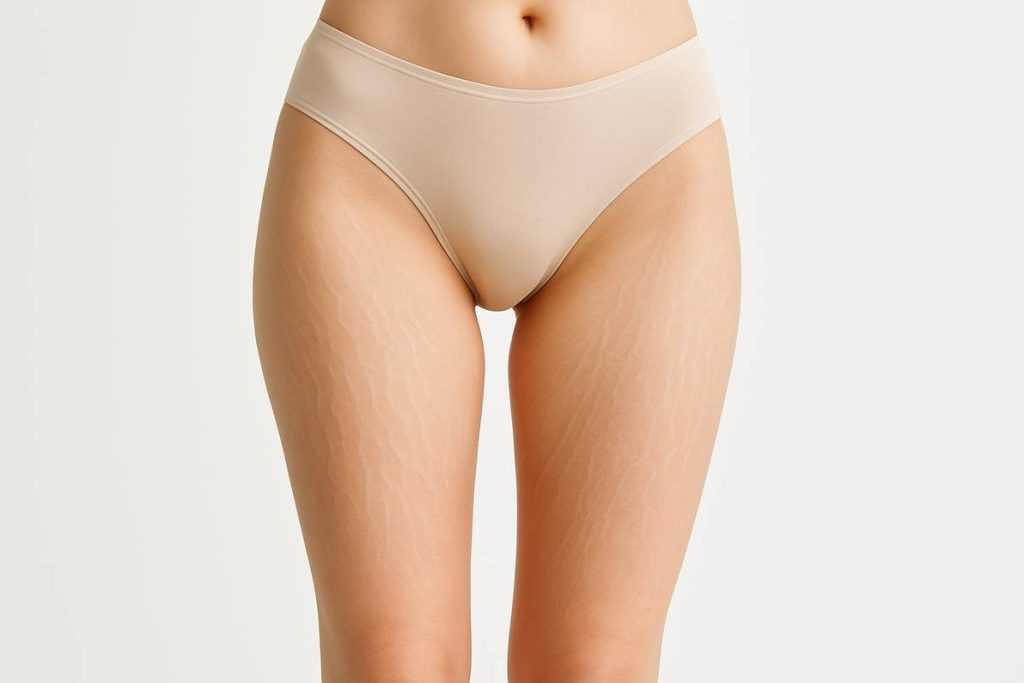
The causes of stretch marks can vary. Striae on the skin are a natural consequence of its excessive stretching during pregnancy. The skin suffers similar deformations when the body rapidly gains weight due to overeating or taking hormonal medications, or conversely, during rapid weight loss.
Stretch mark removal is not a simple task; however, with a comprehensive approach and the application of special techniques, it has an effective solution. The sooner you begin treating striae, the faster you’ll be able to clear them from the body.
Striae appear with microtrauma to the superficial layer of skin and the subcutaneous tissue beneath it. Often the cause of stretch marks may lie in a genetic predisposition factor to collagen deficiency—a protein produced by the body that gives skin its elastic properties. The body, as a self-regulating system, strives to restore skin integrity and forms areas of connective tissue in the form of scars in problem areas, which are called striae.
Of course, the most significant reason for stretch mark formation is excessive skin stretching under increased physical stress; however, the body may also suffer from their appearance against the background of hormonal imbalance.
Stretch marks most often can occur:
Typically, atrophic scar-striae appear in places where the skin is subject to strong stretching or is thinned.
Groups of people susceptible to stretch marks are diverse and extensive. In particular, they may include:
Striae removal is a troublesome procedure. For a long time, the only radical measures against stretch marks were chemical and laser peels, as well as surgical removal of striae. However, skin restoration by each of these methods is accompanied by painful sensations and often leads to complications. Moreover, treating old stretch marks was particularly dangerous. A true revolution in the «striae treatment» category was injection therapy using COLLOST® collagen gel.
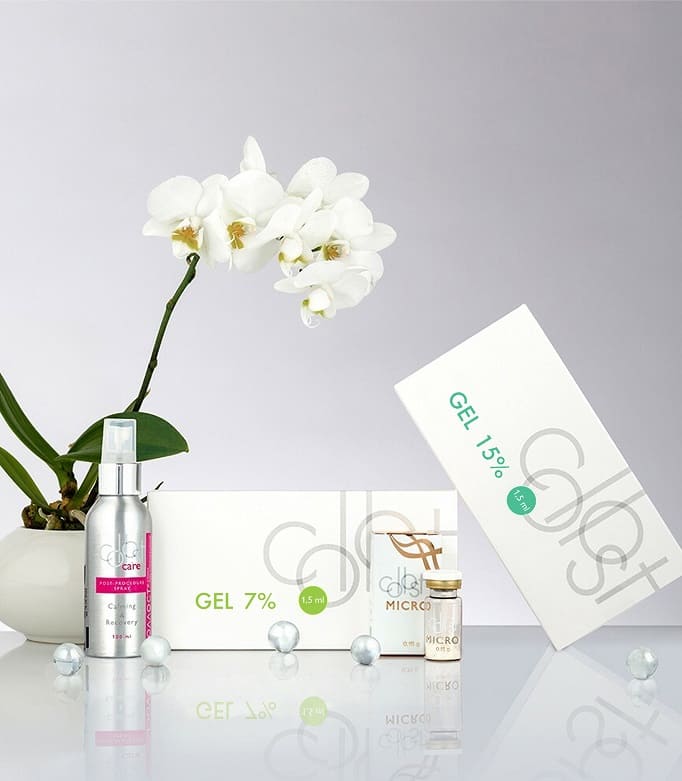
COLLOST® collagen gel is a unique biological material based on natural collagen. The essence of collagen therapy method is that gel injections into the striae area lead to synthesis of the body’s own collagen, which results in complete restoration of the skin’s elastic properties.
COLLOST® gel for striae has proven itself in clinical trials as a highly effective alternative to traditional methods, as it reduces all their negative manifestations to virtually zero. Aesthetic surgery has given a worthy evaluation to the new biomaterial, making it increasingly in demand.



Write to us and our specialists respond as soon as possible