Acne scars are not just an aesthetic defect but a problem affecting confidence and quality of life. Post-acne occurs after inflammatory processes, leaving scars, pits, or pigmentation. Collagen, the skin’s key protein, plays a central role in their formation and treatment.[1] We’ll examine why scars appear and how COLLOST® collagen therapy restores skin micro-relief.
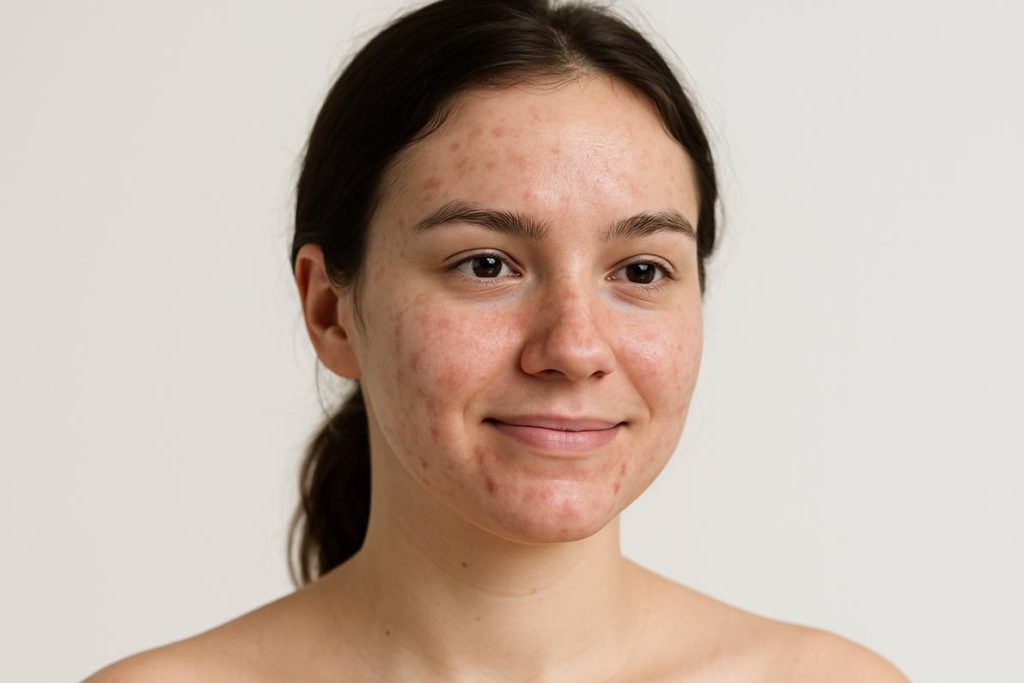
Acne is an inflammatory skin condition caused by pore blockage, excess sebum, or bacterial infection. Deep inflammation damages the dermis, triggering healing where collagen plays the main role.[1]
Collagen comprises approximately 70% of the dermis, forming the framework for elasticity and strength. It’s synthesized by fibroblasts, but in acne, the healing process can be disrupted:[2]
Collagen deficiency. Insufficient synthesis leads to atrophic scars—pits typical of cheeks and temples.
Excess collagen. Excessive production forms hypertrophic scars—raised areas.
Structural disruption. Inflammation fragments collagen fibers, worsening turgor and texture.[1,2]
Squeezing pimples, prolonged inflammation, or deficiency of vitamin C and zinc aggravate scars by disrupting collagen synthesis.[3]
Post-acne manifests in different forms related to collagen:
Atrophic scars. Pits occur due to collagen deficiency unable to fill the damage.[4]
Hypertrophic scars. Raised scars form with excess collagen, often after cystic acne.[4]
Pigmentation spots. Accompany scars, intensifying the defect.[3]
Rolling scars. Wave-like depressions caused by fibrous bands disrupting the collagen framework.[3]
The balance of collagen synthesis and breakdown determines skin recovery. For cosmetologists, it’s important to consider scar type when choosing therapy, for example, COLLOST® for atrophic scars.[3]
Collagen therapy is a method of combating post-acne manifestations, addressing collagen deficiency or imbalance. The goal is to restore the collagen framework, even out micro-relief, and improve texture.
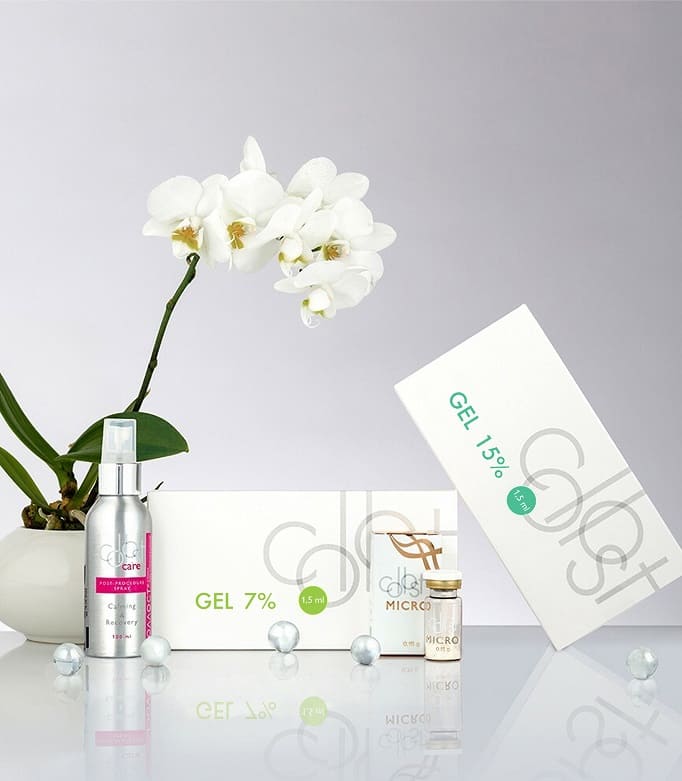
For this purpose, COLLOST® injections are used. Preparations based on native type I collagen (COLLOST® gels 7% and 15%, COLLOST® micro) replenish deficiency, stimulating regeneration.[4]
To enhance the effect, additional procedures may also be applied, effectively combining collagen injections and device-based techniques, for example, RF lifting.
Research conducted at the Institute of Plastic Surgery in 2018 shows: 3-5 COLLOST® procedures (micropapular technique, dosage up to 1.5 ml) reduce atrophic scars by 30-50%. Using COLLOST® post-procedure spray accelerates recovery.[3,7]
For cosmetologists, treating post-acne is a comprehensive process requiring an individual approach. Before starting therapy, it’s important to conduct diagnostics, assessing scar type, depth of damage, and overall skin condition. Regenerative procedures, such as fractional laser, are effective for deep atrophic scars but require a recovery period. For superficial scars, COLLOST® collagen injections are suitable, activating fibroblasts without prolonged rehabilitation.[6]
Injectable collagen-based preparations, such as COLLOST®, are becoming increasingly popular thanks to their ability to improve skin quality and stimulate regeneration. Combined protocols—for example, alternating collagen therapy with laser resurfacing—give the best results, especially for patients aged 30-50 with pronounced scars.[3,6]
Patients facing post-acne can maintain the results of professional procedures at home:
Sun protection. SPF 30+ prevents pigmentation and protects new collagen from UV damage.
Active ingredients. Serums with retinol or niacinamide stimulate skin renewal and improve its texture.[3]
Nutrition. A diet rich in protein (fish, eggs), vitamin C (berries, peppers), and zinc (nuts) supports skin regeneration.
Moisturizing. Creams with hyaluronic acid and ceramides strengthen the skin barrier, reducing inflammation risk.[3]
It’s important to avoid aggressive scrubs or homemade peels that can aggravate scars. Regular consultations with a cosmetologist will help adjust care and prevent new breakouts.[3]
COLLOST® is an injectable preparation based on native type I collagen, maximally close in structure to human collagen, ensuring high biocompatibility. The preparations are available in forms: gel 7% and 15%, as well as COLLOST®micro powder.
COLLOST® is injected directly into scar tissue, where damaged collagen fibers are gradually replaced by healthy tissue. Clinical studies confirm that after a course of 4–7 COLLOST® procedures, skin relief improves by 40-60%, making scars less noticeable.[4]COLLOST® post-procedure spray enhances skin recovery and hydration.
Atrophic acne scars are not a sentence. Collagen plays a key role in their correction, and modern methods, including collagen therapy, can significantly improve skin quality.[7] For cosmetologists, this is an opportunity to offer patients scientifically based solutions, such as COLLOST®, which provide lasting improvement in texture and radiance.
For patients aged 25–50, it’s a chance to regain confidence by combining professional procedures with proper care. COLLOST® injections gradually restore skin turgor and quality, especially in delicate areas. Protect your skin from the sun, nourish it from within, and trust a specialist—and post-acne will cease to be a problem.



Write to us and our specialists respond as soon as possible