Injectable procedures are the gold standard in cosmetology for correcting age-related changes without surgery. COLLOST® collagen-based products and hyaluronic acid fillers are both effective, but their mechanisms and indications differ.[1] We’ll examine how COLLOST® collagen therapy and fillers address aesthetic concerns.

Collagen comprises 70% of the dermis, forming a network of fibers that provide firmness, strength, and elasticity. Decreased collagen synthesis causes wrinkles, sagging, and volume loss.[2]
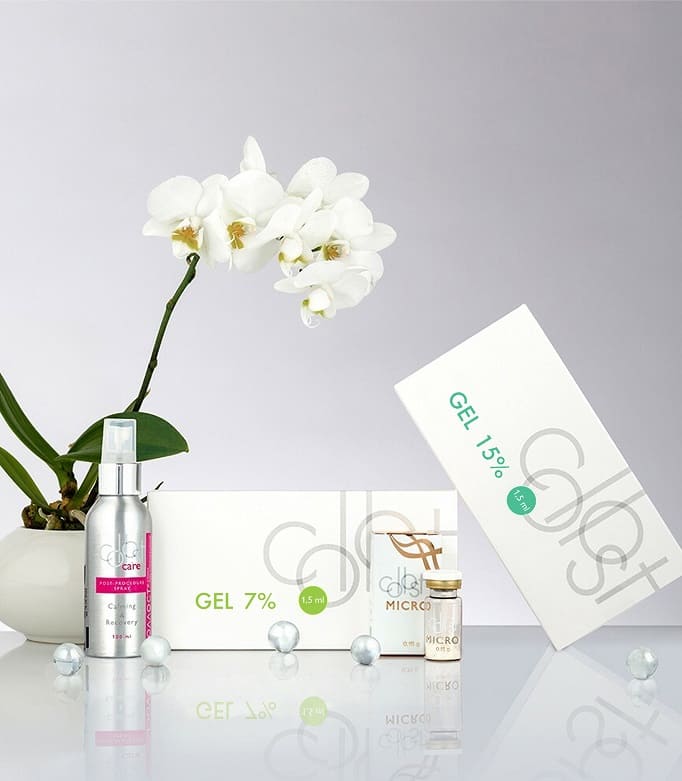
COLLOST®consists of injectable preparations (7% and 15% gels, COLLOST® micro micronized powder) based on native Type I collagen that stimulate fibroblast activity and tissue regeneration. They compensate for collagen deficiency in the dermis while also activating the skin’s own collagen synthesis.[3]
Fillers most commonly have a hyaluronic acid base (such as Juvederm, Restylane). They fill intercellular spaces and retain moisture, creating volume.[4] Fillers don’t stimulate collagen production but provide hydration and visual skin smoothness.[4]
Collagen and fillers address different objectives:[5]
COLLOST®: Integrates into the dermis and is replaced by the body’s own tissue. Activates fibroblast function, enhancing collagen synthesis and maintaining turgor. Has a cumulative effect through triggering collagenogenesis.[3]
Fillers: Hyaluronic acid fills voids, creating instant volume. Attracts water, smoothing the skin. The effect is immediately visible, but result duration is limited to the filling effect. In some cases, it doesn’t exceed 6 months.[6]
COLLOST® collagen therapy restores skin quality, density, and firmness.[5] Fillers, in turn, correct contours and restore lost volume.[5]
Cosmetic procedures have different application specifics:
COLLOST® collagen therapy is suitable for rejuvenation and wrinkle correction, combating sagging and loss of turgor. Biomaterials are also used to eliminate post-acne marks, scars, and stretch marks.[7] Collagen injections are effective for addressing involutional changes in the décolletage, neck, and facial skin, particularly for the sensitive periorbital area around the eyes.[3]
Fillers are typically used for contouring lips, cheekbones, chin, and nasolabial folds. They handle quick aesthetic correction tasks, promote skin hydration, and protect against dryness and flaking.[1,4]
COLLOST® collagen injections are effective for long-term restoration of skin quality, while hyaluronic acid-based fillers are suitable for achieving rapid results.[5]
COLLOST® preparations differ from fillers in that they contain natural collagen that easily integrates into the dermis and forms its framework.[5] This achieves:
COLLOST® collagen preparations can be injected into the periorbital area, where skin is particularly sensitive and thin. They promote its densification and increased elasticity, smoothing wrinkles around the eyes.[3]
The choice between COLLOST® and fillers depends on goals and skin condition:
It’s also worth considering that filler injection with hyaluronic acid may cause swelling, heaviness, and puffiness with certain types.[1,6] While fillers provide quick results, they are still limited to tissue filling and hydration.[1]
COLLOST® and fillers are powerful cosmetology tools, each with its own strengths. COLLOST® collagen therapy restores skin from within, providing natural radiance and turgor, while fillers correct volume.[5]
COLLOST® comprises unique injectable preparations based on native Type I collagen. Their structure, similar to human collagen, ensures high biocompatibility.[7,8] COLLOST® introduced into the dermis stimulates tissue regeneration, improving skin texture and turgor.[3] A course of 3-5 procedures is effective for improving skin quality, with results lasting up to a year.[3,8]



Write to us and our specialists respond as soon as possible