Collagen is not merely a protein, but a crucial structural component of the skin responsible for its firmness, density, and youthful appearance. With age, collagen production slows down, leading to the formation of wrinkles, loss of tone, and sagging. Restoring collagen in the skin by stimulating its natural synthesis has become one of the key steps in preserving skin youth and health.[10]

Traditionally, biorevitalization has been understood as an injection therapy based on the administration of hyaluronic acid preparations for deep hydration and improvement of skin quality. The procedure’s goal is to deeply hydrate the skin, restore its tone and elasticity, impart radiance, and improve turgor.[2]
However, in recent years, the term «collagen facial biorevitalization» (or collagen therapy) has emerged, referring to the injection of preparations containing purified, biocompatible collagen (most commonly Type I). The essence of this procedure lies in creating a new, robust skin framework and stimulating the body’s own collagen production (neocollagenesis). This leads to significant dermal densification, increased firmness, wrinkle reduction, and an overall lifting effect.[3]
Thus, while classic biorevitalization focuses on hydration and skin quality improvement through hyaluronic acid, collagen therapy aims to restore the skin’s structural framework by stimulating the synthesis of the body’s own collagen.[4]
Both procedures promote rejuvenation but achieve it through different pathways. Biorevitalization is the optimal choice when the primary concern is insufficient skin hydration. It is indicated for the following issues:
Subcutaneous collagen administration will be more effective when it’s necessary to strengthen the skin’s framework and stimulate the production of the body’s own collagen. Indications for this type of anti-aging injection include:
It’s impossible to say definitively whether collagen injections or biorevitalization are better, as the procedure must be chosen based on specific indications. Often, to achieve optimal results, these two techniques are combined, addressing different aspects of skin aging.[10]
COLLOST® is a preparation created for deep structural skin rejuvenation. It is based on native Type I collagen, similar in structure to human collagen, thereby ensuring ideal biocompatibility.[11]
COLLOST® serves as a foundation for forming a new skin framework, ensures synthesis of the body’s own collagen, and acts as building material for regeneration.[12]
Thanks to COLLOST® preparations, skin becomes noticeably firmer and more toned, facial contours acquire clear definition, skin microrelief improves, and scar deformities are corrected.[13]
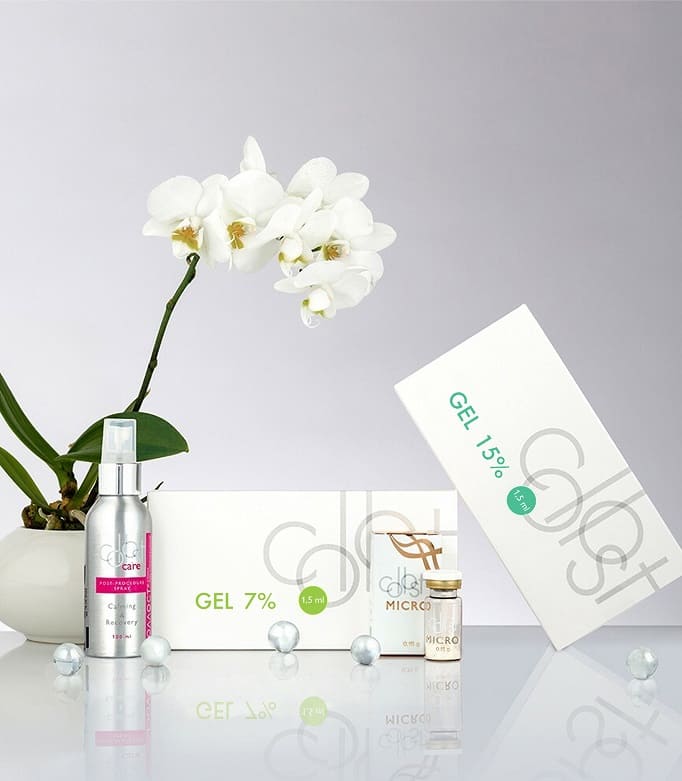
The COLLOST® line features several preparations that address multiple aesthetic concerns, fully adapting to each client’s individual characteristics. COLLOST® is available as a gel with 7% or 15% collagen concentration, and as micronized powder – COLLOST® micro. The preparations can be injected into the upper and lower eyelids up to the lash line.
COLLOST® micro is based on unique patented PoliONICol® and MICRONONIC® technologies. PoliONICol® significantly enhances collagen’s hydrating properties, allowing it to retain more moisture and provide deep tissue hydration. Meanwhile, MICRONONIC® creates a microstructured material from interwoven thread-like particles.[14]
Capillary spaces between microfibers attract and retain water, facilitating cell penetration into the material’s depth. The fibrous structure of microparticles serves as both a biological and mechanical activator of the regeneration process, stimulating neocollagenogenesis.
COLLOST® micro can be hydrated with physiological saline, patient’s blood plasma (sodium citrate tubes), sterile registered solutions of amino acids, trace elements, or hyaluronic acid. This ensures an individualized approach for each patient.



Write to us and our specialists respond as soon as possible